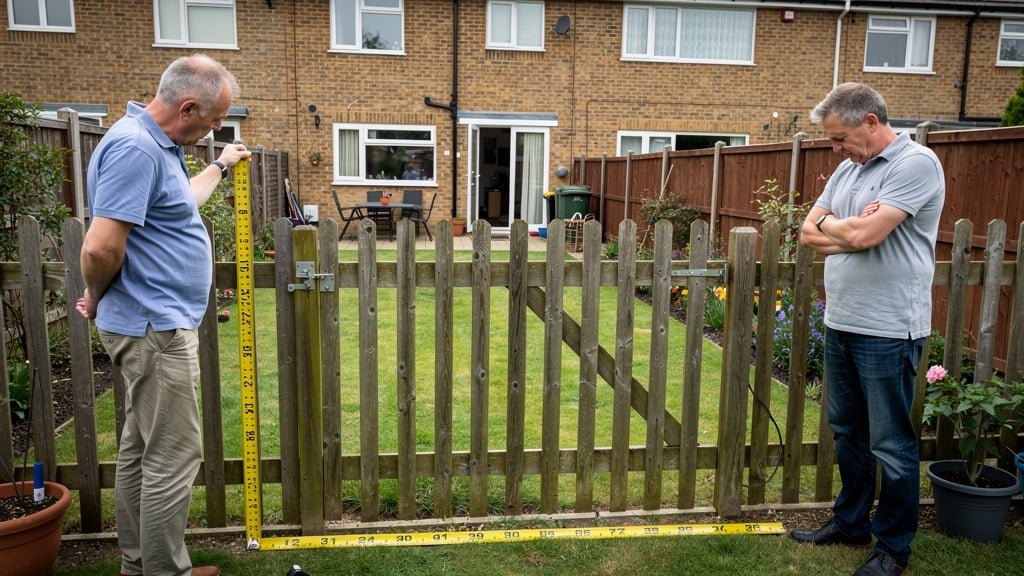
When a boundary dispute occurs over a fence line, it can quickly escalate from a minor disagreement to a costly legal battle. My Boundary Dispute Surveyors have helped hundreds of property owners across England and Wales resolve fence disputes without resorting to expensive legal action. Understanding your rights and the proper procedures can save you thousands in legal costs and preserve your relationship with your neighbour.
Why Fence Boundary Disputes Occur
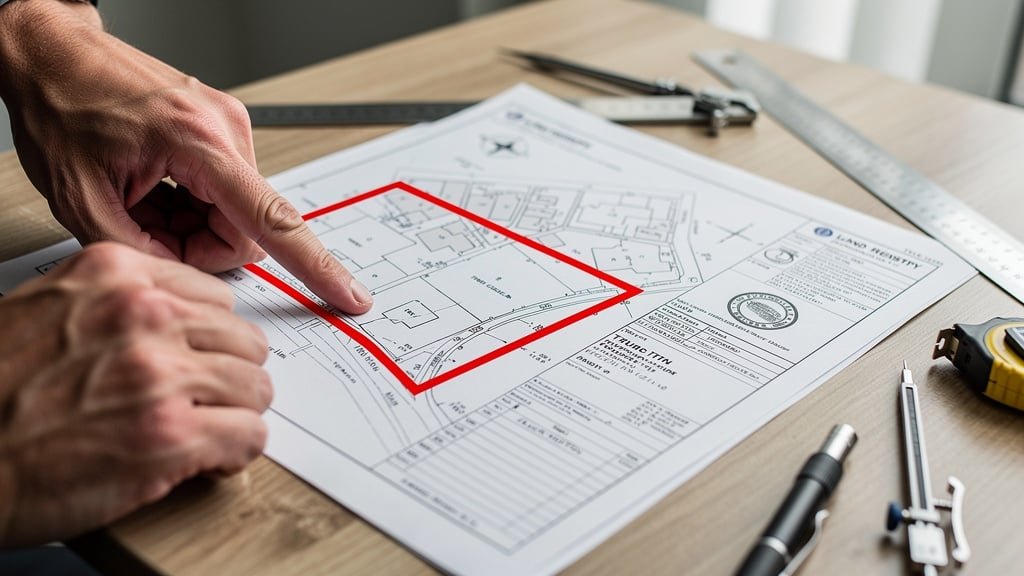
Fence boundary disputes typically arise because of uncertainty about where the legal boundary actually lies. Under the general boundaries rule applied by HM Land Registry, title plans show only the general position of boundaries, not their exact location. This means the red line on your Land Registry title plan might be several inches or even feet away from the true legal boundary position.
Common triggers for fence boundary disputes include:
- One neighbour decides to replace an old fence in a different position
- A new property owner questions the fence line established by previous owners
- Property purchase reveals that the fence doesn't match the title plan
- Building works or extensions near the boundary highlight fence position uncertainty
- Historic fences deteriorate and neighbours disagree on replacement location
Understanding Fence Ownership
Many people believe the fence owner is always on the side where fence posts are visible, but this is a myth. The actual fence owner may be determined by several factors that a chartered land surveyor can investigate:
Checking Your Title Deeds
Your property deeds and Land Registry title may contain information about fence ownership. Look for "T-marks" on the title plan - these small marks indicate which side of the boundary is responsible for maintaining the fence. However, not all title plans include T-marks, and their absence doesn't necessarily mean anything definitive about ownership.
Historic Boundary Evidence
A professional boundary surveyor will review historic Ordnance Survey mapping, old conveyance documents, and previous property deeds to establish the historic boundary position. These documents often reveal how the boundary lies and which property owner has historically maintained fences at this location.
The General Boundaries Rule Explained
The general boundaries rule is fundamental to understanding fence disputes in England and Wales. HM Land Registry explains that title plans do not show exact boundaries because they're based on Ordnance Survey mapping where precision is limited by scale. When title plans are drawn, the red boundary line is typically at least 0.5mm thick, representing several meters on the ground.
This is why physical boundaries on the ground, like fences, often don't precisely match the red line on title plans. It doesn't mean your fence is wrong - it means the title plan isn't designed to show exact measurements. To establish exact boundaries, you would need to apply for a determined boundary through the Land Registry determination process.
Steps to Resolve a Fence Boundary Dispute
1. Gather Your Documents
Start by collecting all relevant documentation:
- Your Land Registry title plan and register (download from Land Registry website)
- Historic property deeds or conveyance documents if available
- Any existing survey reports or boundary reports
- Photographs showing the current fence position and any boundary features
- Correspondence with your neighbour about the dispute
2. Try to Reach an Agreement with Your Neighbour
Before involving professionals, attempt to discuss the matter calmly with your neighbour. Many fence disputes are resolved through reasonable discussion. If you can reach an agreement, consider having it documented as a boundary agreement which can be registered with HM Land Registry.
3. Instruct a Boundary Surveyor
If direct negotiation doesn't work, instruct a RICS-accredited chartered land surveyor who specializes in boundary disputes. Our experienced surveyors will:
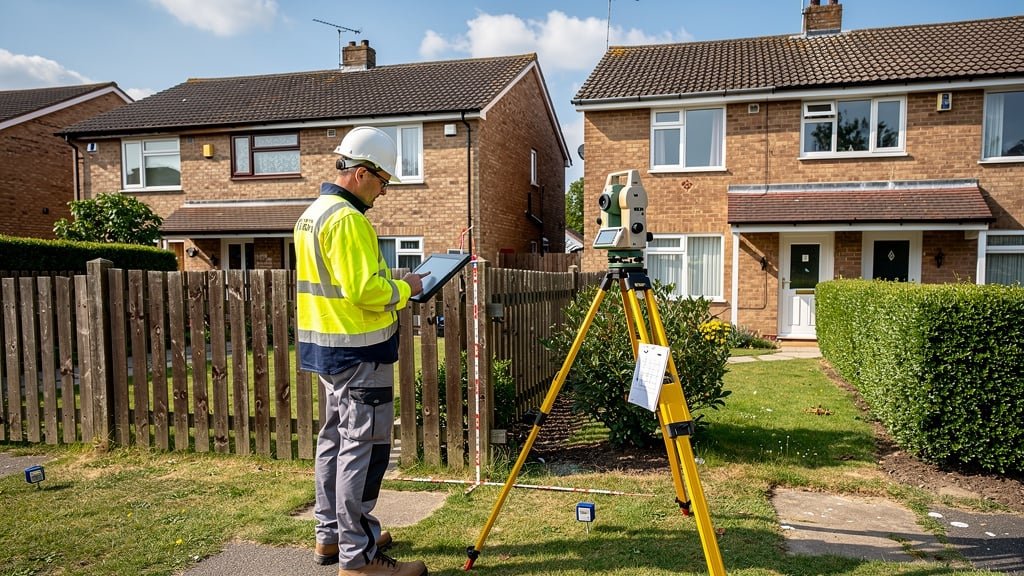
- Conduct a detailed measured survey of your property and the fence line
- Review all available evidence including title plans, deeds, and Ordnance Survey maps
- Analyze boundary features on the ground including fence posts, hedges, and walls
- Research historic boundary positions using old maps and documents
- Prepare a comprehensive boundary report explaining where the fence should be located
4. Use the Boundary Report to Negotiate
A professional boundary report from a chartered surveyor is often enough to resolve the dispute without going to court. The report provides objective, expert evidence that helps both parties understand the position of the boundary. Most neighbours will reach an agreed boundary once presented with clear professional evidence.
5. Consider Land Registry Determination
If your neighbour remains unwilling to accept the surveyor's findings, you can apply to HM Land Registry for a determined boundary. This formal process involves:
- Submitting an application with detailed boundary survey evidence
- Notifying your neighbour of the application
- Allowing time for objections
- Land Registry review of all evidence and expert reports
- Formal determination of the exact boundary line
Preventing Fence Boundary Disputes
Prevention is always better than resolution. Here's how to avoid fence boundary disputes:
Before Property Purchase
When buying a property, commission a boundary survey to identify potential issues before completion. This is particularly important if you notice the fence position doesn't seem to match the title plan, or if there's evidence of previous boundary disputes. Work with your conveyancing solicitor to raise any concerns with the seller.
When Replacing Fences
If you're replacing an existing fence, take careful measurements and photographs before removing the old one. Consider having a topographic survey conducted to precisely document the current fence position. Inform your neighbour of your plans and try to reach agreement before starting work.
Keep Good Records
Maintain records of any boundary-related correspondence, fence maintenance you've performed, and evidence of how long the fence has been in its current position. Long-established fences can provide strong evidence of the accepted boundary line under the doctrine of adverse possession (though this is complex and requires legal advice).
When to Seek Professional Help
You should instruct a boundary dispute surveyor when:
- Your neighbour refuses to discuss the fence position reasonably
- The fence line is significantly different from the title plan
- You're planning building works near the disputed fence
- Your neighbour threatens or begins legal action
- You're buying a property with obvious fence position issues
- You need an expert witness for legal proceedings
The Cost of Fence Boundary Disputes
Resolving a fence boundary dispute through a professional boundary survey typically costs £1,500-£3,000 depending on complexity. This may seem expensive, but compare it to the cost of legal action:
- Solicitor fees for boundary dispute litigation: £10,000-£50,000+
- Court fees and expert witness costs: £5,000-£15,000
- Risk of paying the other side's costs if you lose: potentially £30,000+
Investing in a professional boundary survey early can save you from costly legal action later. Our boundary reports have helped hundreds of clients resolve boundary disputes without going to court.
Working with Solicitors
If your fence dispute does require legal involvement, chartered land surveyors work alongside conveyancing solicitors and litigation solicitors to provide expert evidence. We can:
- Prepare detailed expert reports complying with court requirements
- Provide expert witness testimony in legal proceedings
- Attend joint expert meetings with opposing surveyors
- Support your solicitor with technical boundary expertise
Conclusion
Fence boundary disputes don't have to escalate into expensive legal battles. With the right approach - gathering evidence, attempting negotiation, and instructing a qualified boundary surveyor when needed - most disputes can be resolved amicably. Understanding the general boundaries rule and how Land Registry title plans work is the first step to protecting your property rights without unnecessary conflict.
If you're facing a fence boundary dispute, don't let it escalate. Contact My Boundary Dispute Surveyors for a free consultation. Our RICS-accredited chartered land surveyors have extensive experience resolving fence disputes across England and Wales, helping property owners understand the position of their boundaries and reach practical solutions.
Need Help with a Fence Boundary Dispute?
Our experienced chartered land surveyors can help you resolve your fence boundary dispute professionally and cost-effectively. We provide detailed boundary surveys and expert reports to help you understand where your boundary lies and avoid costly legal action.