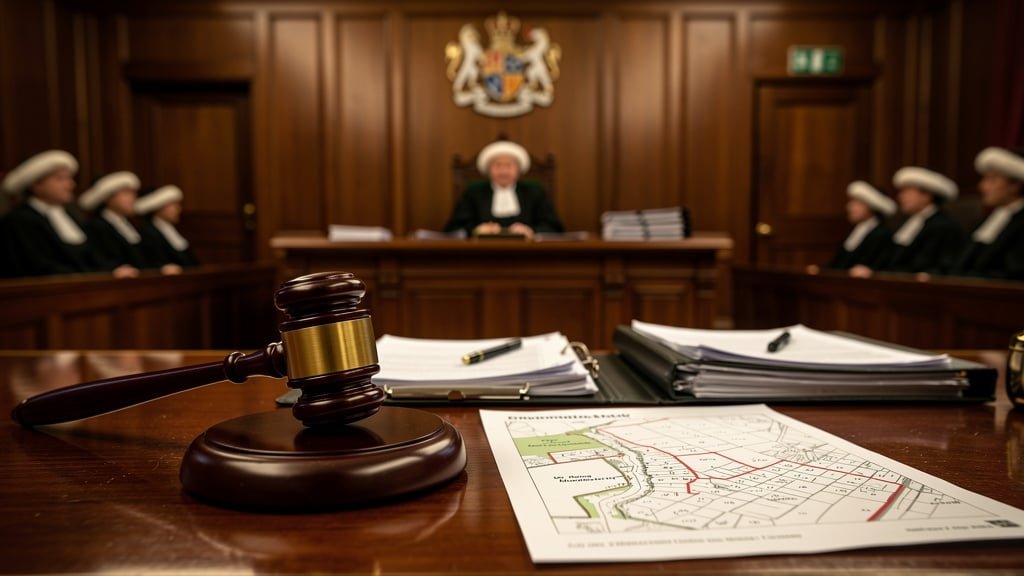
Understanding what happens when boundary disputes reach court is essential for any property owner facing potential litigation in England and Wales. My Boundary Dispute Surveyors regularly provide expert witness testimony in boundary dispute court cases and work alongside solicitors preparing cases for trial. While court proceedings should always be a last resort after exhausting negotiation and mediation options, sometimes legal action becomes unavoidable when neighbors cannot agree or one party refuses reasonable settlement. This guide will help you understand the court process, what judges look for when determining property boundaries, the crucial role of expert evidence from boundary surveyors, and the realistic costs and timescales involved in boundary litigation.
When Boundary Disputes Go to Court
Most boundary disputes are resolved without court proceedings through direct negotiation, professional boundary surveys, mediation, or expert determination. However, certain situations make court proceedings more likely or unavoidable. Litigation typically becomes necessary when one neighbor absolutely refuses to negotiate or engage with the dispute despite reasonable attempts at communication, clear professional evidence supports one party's position but the other neighbor ignores or rejects it without good reason, a neighbor is building or has built structures on disputed land and won't stop or remove them, the disputed boundary affects significant property value or development rights making compromise unreasonable, one neighbor has issued court proceedings meaning the other must defend their position, or urgent injunctive relief is needed to prevent irreparable harm like demolition of boundary features. Before committing to court proceedings, conduct a realistic cost-benefit analysis with your solicitor. Boundary litigation commonly costs thirty thousand to one hundred thousand pounds or more for cases that reach trial. Is the disputed land worth this cost? What are your realistic prospects of success? Can you afford to lose and potentially pay a portion of the other side's costs as well?
Exhausting Pre-Action Requirements
Courts expect parties to attempt settlement before issuing proceedings. The Civil Procedure Rules include pre-action protocols requiring parties to exchange detailed letters setting out their case and the evidence they rely upon, disclose key documents including title plans, deeds, and survey reports, allow reasonable time for responses and consider offers of settlement, genuinely attempt to settle through negotiation or mediation, and explain any court application why settlement attempts failed. Failure to comply with pre-action requirements can result in cost sanctions even if you ultimately win your case. Courts take a dim view of parties who rush to litigation without genuine settlement attempts.
The Court Process for Boundary Disputes
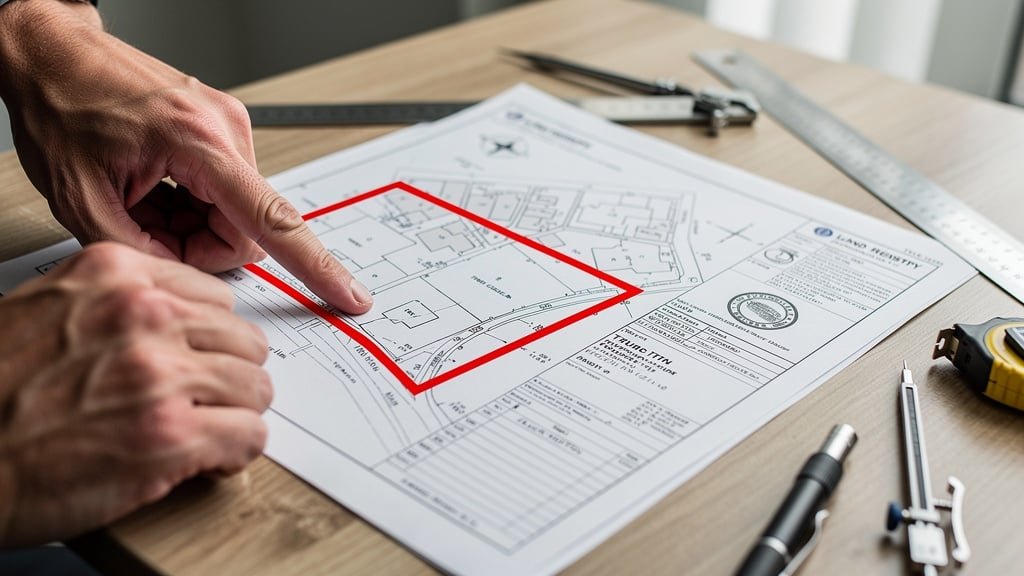
Boundary dispute court cases typically proceed through several distinct stages from initial claim to final judgment.
Issuing the Claim
Court proceedings begin when the claimant (the person bringing the claim) files a claim form with the court. For boundary disputes, claims are typically issued in the County Court local to the property, though high-value or complex cases may be in the High Court. The claim form must state the remedy sought such as declaration about the boundary position, injunction requiring removal of encroaching structures, damages for trespass or nuisance, or order for determined boundary to be registered. It must also provide brief details of the claim and the legal basis for it. At this stage, the claimant must also pay the court issue fee which ranges from several hundred to several thousand pounds depending on the value of the claim.
Service and Acknowledgment
The claim form must be served on the defendant (the person being sued) who then has fourteen days to file an acknowledgment of service confirming they intend to defend. If the defendant doesn't acknowledge service, the claimant may be able to obtain default judgment. Once acknowledged, the defendant has a further fourteen days (twenty-eight days total from service) to file a defence setting out their response to the claim and the evidence they rely on.
Directions and Case Management
Once both parties have filed their statements of case, the court gives directions for preparing the matter for trial. Typical directions include requirements for disclosure where both parties must disclose relevant documents in their possession, exchange of witness statements setting out factual evidence from the parties and any other witnesses, exchange of expert reports typically from boundary surveyors acting as expert witnesses, case management conferences where the judge reviews progress and gives further directions, and setting a trial date or trial window. The court actively case manages boundary disputes to ensure they proceed efficiently toward trial. Parties who fail to comply with directions may face sanctions including orders to pay wasted costs or striking out their case entirely.
Expert Evidence
Expert evidence from professional boundary surveyors is almost always crucial in boundary dispute cases. The court process for expert evidence typically involves each party instructing their own expert land surveyor to prepare a report, exchange of expert reports simultaneously on a specified date, without prejudice discussion between experts to narrow issues and agree facts where possible, joint expert statement identifying matters agreed and matters still in dispute, and expert witness testimony at trial where experts may be cross-examined. Courts sometimes order a single joint expert to be instructed by both parties to reduce costs, particularly for smaller disputes. However, in significant cases each party usually has their own expert. Expert evidence addresses the position of the legal boundary based on title plans, deeds, and historic evidence, technical survey measurements of physical features on the ground, analysis of Ordnance Survey mapping and historic maps, and expert opinion on the most likely legal boundary position.
Trial
If settlement isn't reached (and many cases settle shortly before trial once the strength of evidence becomes clear), the matter proceeds to trial. Boundary dispute trials typically last one to five days depending on complexity. The trial process involves opening statements where each party's barrister or solicitor outlines their case, claimant's evidence where the claimant and their witnesses give evidence and are cross-examined, defendant's evidence where the defendant and their witnesses give evidence and are cross-examined, expert evidence where boundary surveyors give their evidence and are cross-examined, closing arguments where both sides summarize their cases, and judgment where the judge determines the boundary position and makes orders. In straightforward cases, the judge may give judgment immediately after closing arguments. In complex cases, judgment may be reserved meaning the judge takes time to consider before issuing a written judgment days or weeks later.
What Judges Consider When Determining Boundaries
Understanding what evidence judges find persuasive helps parties assess the strength of their case and prepare evidence effectively.
The Primacy of Title Documents
Judges start with Land Registry title plans and registers as the primary evidence of what land each party owns. However, judges understand and apply the general boundaries rule meaning title plans show only approximate positions. Unless a property has a determined boundary, the exact boundary position must be inferred from all available evidence. Old conveyance deeds, particularly those predating Land Registry registration, often contain more detailed boundary descriptions or measurements than modern title plans. Judges give significant weight to historic deeds that clearly describe boundary positions. Any specific boundary agreements between previous owners, if properly documented and capable of binding successors, are highly persuasive evidence.
Historic Maps and Documents
Historic Ordnance Survey mapping showing how boundaries have been depicted over decades or centuries is valuable evidence. Judges look for consistency—if maps from 1850, 1900, 1950, and 2000 all show a hedge or wall in the same position, this strongly suggests that's where the boundary has been understood to lie. Old estate plans, sale particulars, and conveyance plans can provide detailed information about boundary positions at specific dates. Archaeological evidence of historic boundary markers, old fence lines, or ditch systems can help establish long-standing boundary positions.
Physical Features on the Ground
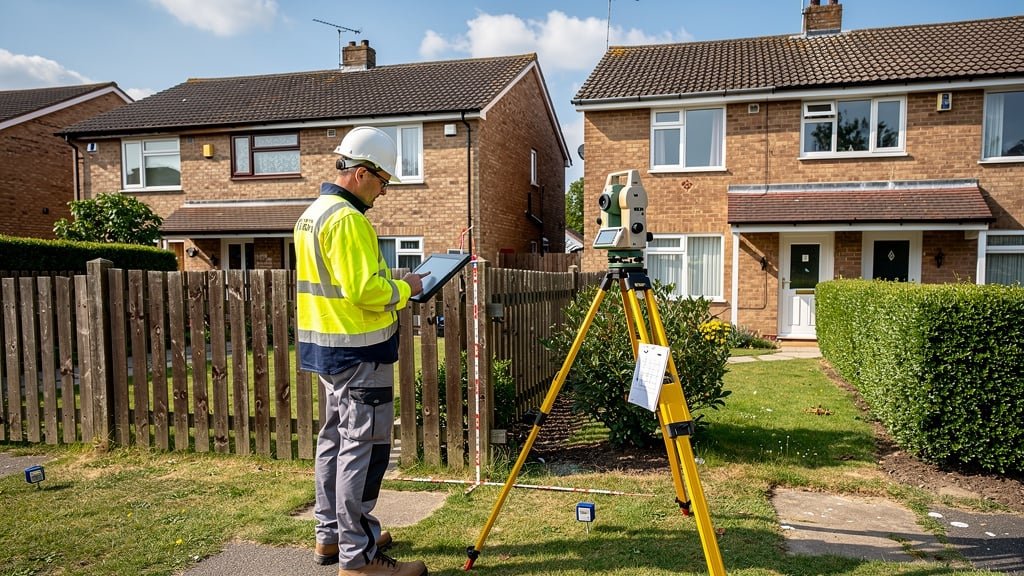
Judges examine physical evidence including long-established boundary features like old walls, hedges, or fences that may mark the accepted boundary position, the relationship between buildings and boundaries (e.g., if a house was clearly built assuming a particular boundary position), evidence of long-term use and maintenance patterns, and survey measurements from professional land surveyors showing precise positions of physical features. Physical features that have existed for many decades carry more weight than recently erected fences or markers. Judges are particularly interested in whether physical boundaries have remained stable or have been moved over time.
Evidence of Long-Standing Use
How the parties and their predecessors have used land near the boundary can be relevant evidence. Long-term use patterns including gardens cultivated to a particular line for many years, driveways or parking areas treated as belonging to one property, maintenance patterns showing who has maintained which boundary features, and any documentary evidence of how boundaries were understood historically all help judges determine likely boundary positions. However, judges carefully distinguish between evidence of where the boundary was understood to be and claims based on adverse possession (which has its own specific legal requirements).
Expert Opinion
Expert evidence from experienced boundary surveyors who have analyzed all available documentary and physical evidence is highly influential. Judges particularly value experts who clearly explain their reasoning, acknowledge uncertainties in the evidence, identify areas of agreement with the opposing expert, remain independent rather than acting as advocates for one party, and provide opinions based on objective analysis rather than what their instructing party wants to hear. An expert who presents as balanced and objective will be far more persuasive than one who appears to be advocating for one side regardless of the evidence.
The Role of Expert Witness Surveyors
Professional boundary surveyors acting as expert witnesses play a crucial role in boundary dispute court cases. Understanding their role helps parties work effectively with their experts and understand expert evidence from the other side.
The Expert's Duty to the Court
Expert witnesses have an overriding duty to the court that takes precedence over any duty to the party instructing them. This means experts must provide independent opinions based on objective analysis, not act as advocates for the party paying them, clearly identify matters outside their expertise, not mislead the court by omitting relevant matters, inform all parties if their opinion changes, and cooperate with opposing experts to narrow issues and agree facts where possible. This independence is why experienced RICS-accredited boundary surveyors are valued—they understand their duty to remain objective even when providing evidence for one party.
What Expert Reports Should Include
A proper expert report for a boundary dispute case includes statement of the expert's qualifications and experience, explanation of instructions received and documents reviewed, summary of relevant facts about the property and dispute, analysis of title documents including title plans and historic deeds, review of historic maps and Ordnance Survey evidence, description of site surveys and measurements taken, comparison of documentary evidence with physical features on the ground, identification of uncertainties and limitations in the evidence, expert opinion on the most likely boundary position based on all evidence, range of opinion if certainty is not possible, and statement of truth confirming the expert's duty to the court. Courts expect expert reports to be comprehensive, clearly reasoned, and balanced. Reports that read like advocacy documents rather than objective analysis lose credibility.
Expert Meetings and Joint Statements
Courts usually order experts from both sides to meet without the parties or their legal representatives present. The purpose is to identify areas of agreement and narrow the issues in dispute. After meeting, experts prepare a joint statement setting out matters they agree on, matters they disagree on, and reasons for disagreement. Expert meetings are valuable because experts often find they agree on most factual matters and disagree only on interpretation or opinion. This narrows what the court must decide at trial.
Cross-Examination at Trial
Expert witnesses must attend trial to give evidence and be cross-examined by the other party's barrister or solicitor. Effective cross-examination can significantly affect the weight a judge gives expert evidence. Good experts maintain credibility under cross-examination by answering questions directly and honestly, acknowledging points made by the other side where appropriate, explaining their reasoning clearly, not becoming defensive or argumentative, and admitting if they don't know something rather than speculating. A boundary surveyor who remains professional and objective under cross-examination will be far more persuasive than one who becomes defensive or evasive.
Costs of Boundary Dispute Litigation
The cost of taking a boundary dispute to court is often the most important consideration in deciding whether to proceed with litigation.
Typical Legal Costs
Legal costs for boundary dispute litigation vary significantly based on complexity but typical ranges include initial advice and pre-action correspondence at two thousand to five thousand pounds, issuing proceedings through to case management at five thousand to fifteen thousand pounds, preparing for trial including disclosure and expert evidence at fifteen thousand to forty thousand pounds, trial preparation and attendance at ten thousand to thirty thousand pounds, and appeals if the matter goes to the Court of Appeal at twenty thousand to one hundred thousand pounds or more. These figures are for a single party. The total cost of litigation for both parties combined often exceeds one hundred thousand pounds for cases that reach trial.
Expert Witness Costs
Expert witness costs are separate from legal costs and include preparation of expert report at three thousand to ten thousand pounds depending on complexity, attending expert meetings and preparing joint statements at one thousand to three thousand pounds, review of opposing expert's report and preparation of response at one thousand to five thousand pounds, and attendance at trial to give evidence at two thousand to ten thousand pounds per day. Expert costs easily add ten thousand to thirty thousand pounds to the total litigation cost.
Court Fees and Other Costs
Additional costs include court issue fees from several hundred to several thousand pounds, hearing fees if the trial lasts multiple days, costs of court bundles and copying documents, and travel and accommodation if the court is distant from where parties live. While smaller than legal and expert costs, these still add several thousand pounds to the total.
Risk of Paying the Other Side's Costs
Perhaps the most significant financial risk is that if you lose, you'll typically be ordered to pay a substantial portion of the winning party's legal costs. Even if you win, you're unlikely to recover all your own costs from the losing party. This means boundary litigation is financially risky for both sides. A party spending fifty thousand pounds on litigation might only recover thirty thousand pounds even if they win completely, and might have to pay the other side's thirty thousand pounds if they lose (total cost seventy thousand pounds). This risk is why judges encourage settlement and why most boundary disputes settle before trial.
Settlement and Alternative Dispute Resolution
Even after court proceedings have started, settlement remains possible and preferable to trial in most cases.
Part 36 Offers
The Civil Procedure Rules include Part 36 which provides a mechanism for making formal settlement offers with cost consequences. A party can make a Part 36 offer to settle the case on specified terms. If the offer is rejected but the party making the offer does as well or better at trial than the offer, they can recover enhanced costs from the other side. Part 36 creates pressure to settle reasonably because rejecting a reasonable offer and doing worse at trial can be very expensive. Effective use of Part 36 offers is an important part of litigation strategy.
Mediation After Proceedings Start
Courts strongly encourage mediation even after proceedings have started. Many judges will stay proceedings and order mediation before allowing cases to proceed to trial. Mediation after proceedings start often succeeds because both parties have better understanding of the evidence and the costs already incurred make settlement more attractive. Success rates for mediation remain high (seventy to eighty percent) even for cases that have reached court proceedings.
Conclusion
Boundary dispute court cases are complex, expensive, and risky even for parties with strong evidence. Understanding the court process including pre-action requirements, directions and case management, the crucial role of expert evidence, and trial procedures helps parties make informed decisions about whether litigation is appropriate. Judges determine boundaries by considering title documents, historic maps and evidence, physical features on the ground, and expert opinion from professional boundary surveyors. The financial costs including legal fees of thirty thousand to one hundred thousand pounds or more, expert witness costs of ten thousand to thirty thousand pounds, and risk of paying the other side's costs if you lose, make settlement almost always preferable to trial where realistic. Even after proceedings start, settlement through negotiation or mediation remains possible and is encouraged by courts.
At My Boundary Dispute Surveyors, our experienced land surveyors regularly act as expert witnesses in boundary dispute court cases throughout England and Wales. We provide comprehensive expert reports, work with opposing experts to narrow issues, and give clear evidence at trial when cases cannot be settled. Our expertise in both technical surveying and court procedures helps solicitors present the strongest possible cases for their clients while always working toward reasonable settlement where possible.
Need an Expert Witness for Boundary Litigation?
Our RICS-accredited surveyors provide comprehensive expert witness services for boundary dispute court cases. We prepare detailed reports, attend expert meetings, and give clear evidence at trial, always maintaining the independence and objectivity courts expect from expert witnesses.
Frequently Asked Questions
How long does a boundary dispute court case take?
From issuing proceedings to trial typically takes twelve to twenty-four months in the County Court. Complex cases or High Court proceedings can take longer. Appeals can add another twelve to twenty-four months. Most cases settle before trial which significantly reduces timescales.
What are my chances of winning a boundary dispute court case?
This depends entirely on the strength of your evidence. Cases with clear title deed descriptions, consistent historic maps, and objective expert evidence have good prospects. Cases based mainly on assumptions or recent changes to boundaries face challenges. Get realistic advice from your solicitor and boundary surveyor before proceeding.
Can I represent myself in boundary dispute litigation?
You can represent yourself as a litigant in person but boundary litigation is complex involving detailed procedural rules, evidence law, and technical surveying issues. Most judges strongly recommend legal representation and lack of representation significantly reduces your chances of success.
What happens if I win my boundary dispute case?
The judge will make a declaration about the correct boundary position and may order the losing party to remove any encroaching structures, pay damages, and pay a portion of your legal costs. You can register the judgment with Land Registry and if necessary enforce it through contempt proceedings if the other party doesn't comply.
Is it worth going to court over a small piece of land?
This requires careful cost-benefit analysis. If litigation will cost fifty thousand pounds for both parties combined but the disputed land is worth five thousand pounds, the economics favor settlement even at a financial loss rather than litigation. Consider whether the dispute is really about money or principle before proceeding.
Can boundary dispute court cases be appealed?
Yes, appeals to the Court of Appeal are possible but only on points of law or if the judge's decision was clearly wrong. Appeals are expensive (twenty thousand to one hundred thousand pounds or more) and success rates are low. Most boundary dispute judgments are not successfully appealed.